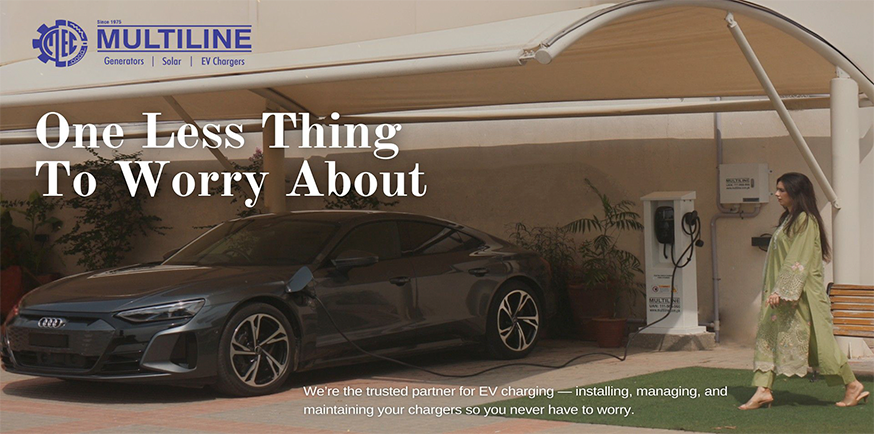

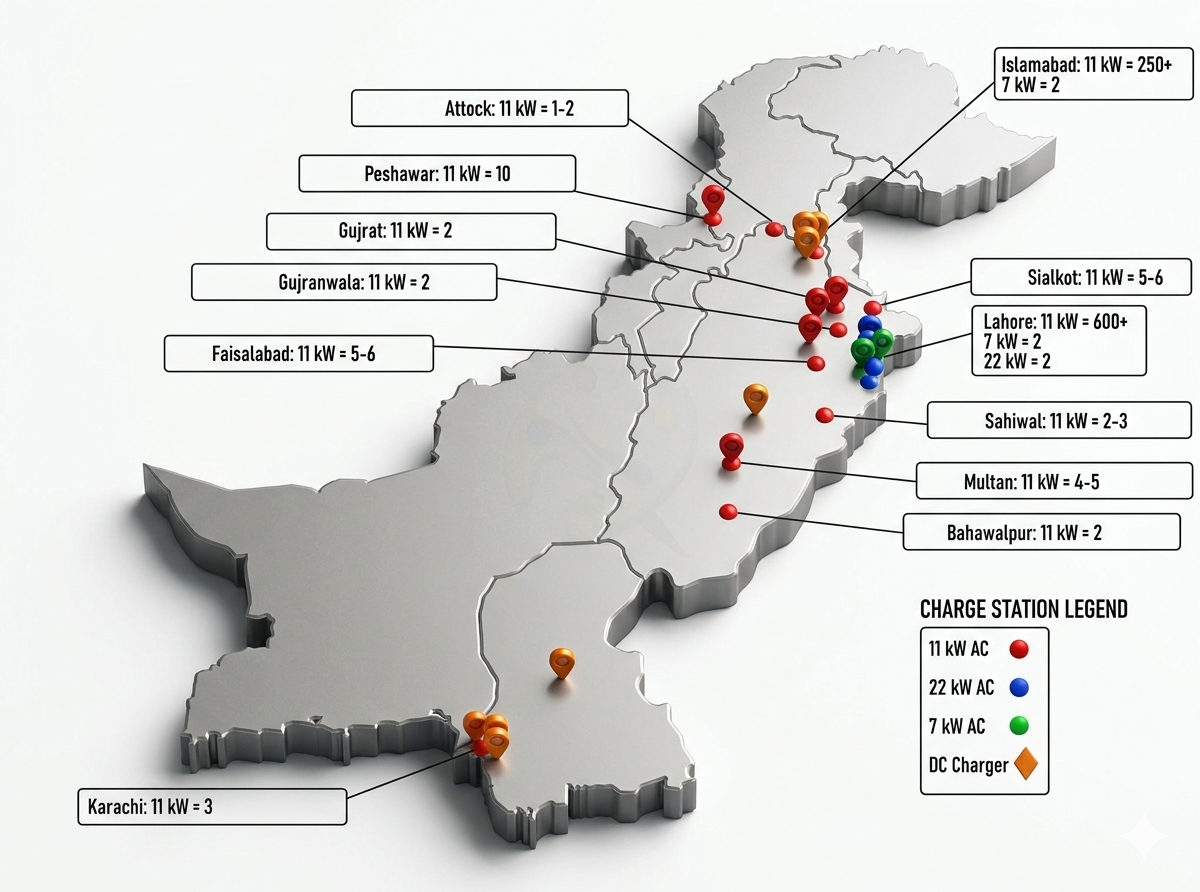
Multiline has been actively supporting the electric vehicle ecosystem in Pakistan since 2017. With over 4000 AC chargers installed nationwide, we've built strong partnerships with leading automotive brands and dealerships.
Our installation portfolio includes chargers for a wide range of premium EV's such as:






Installation of your existing charger, with full warranty and support.
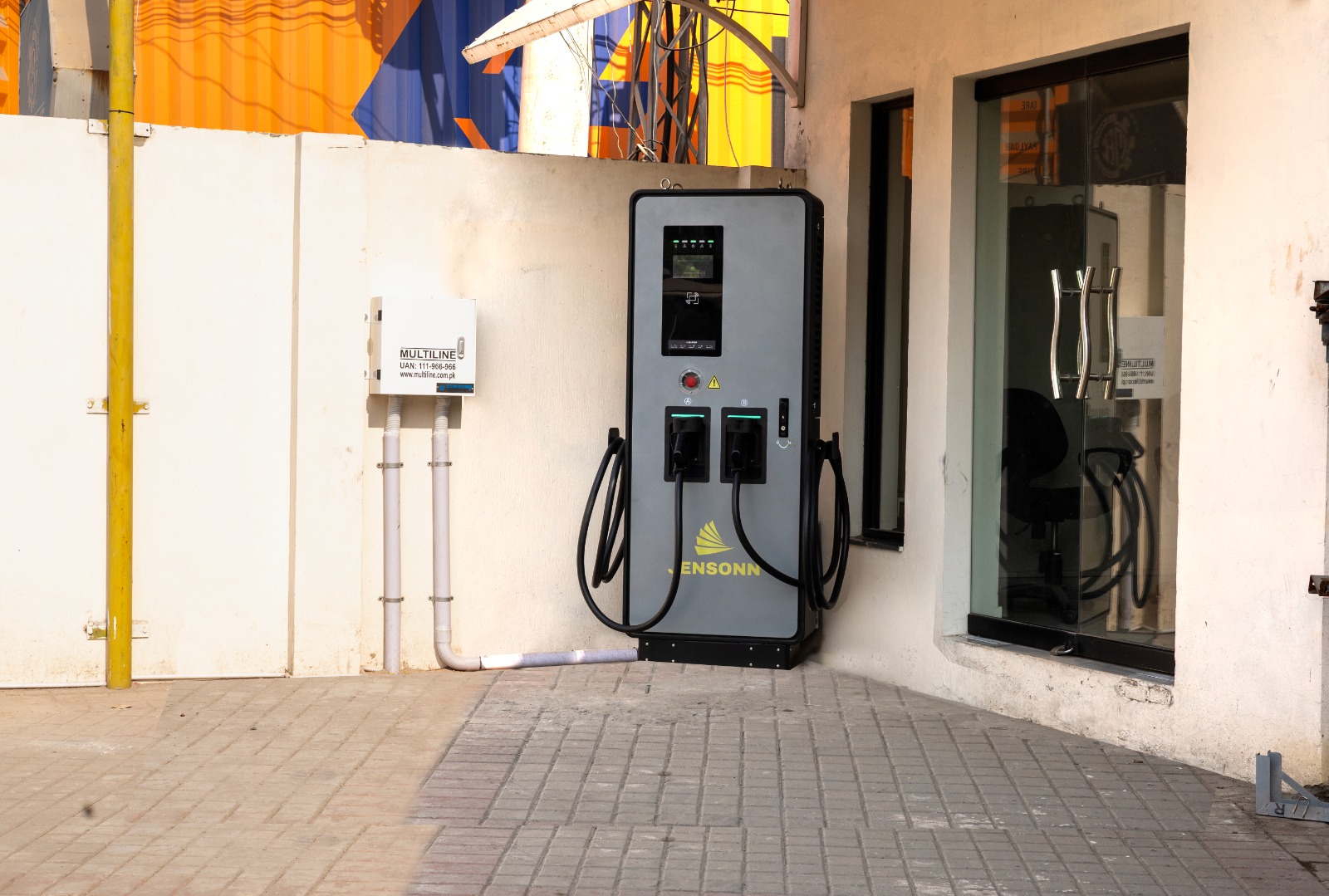
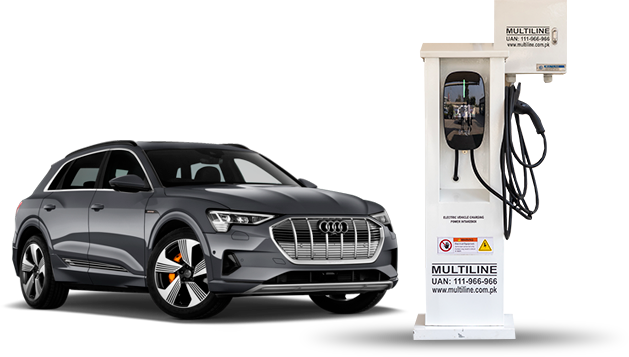
Supply and installation of premium AC and DC chargers from multiple global manufacturers, backed by comprehensive local aftersales support.
Multiline offers tailored, high-performance charging solutions, backed by comprehensive local after-sales support, ensuring efficient and dependable power management for your specific setup and vehicle requirements.
| Model | Power Rating | Amperage | Phase | Origin | |
|---|---|---|---|---|---|
| Jensonn AC Charger | 7 kW | 32 A | Single-phase | China |  |
| Jensonn AC Charger | 11 kW | 16A per phase | Three-phase | China | |
| Jensonn AC Charger | 22 kW | 32A per phase | Three-phase | China | |
| Smappee EV Wall/EV Base | 22 kW | 32A per phase | Three-phase | Belgium | |
| ABB AC Charger | 11 kW | 16A per phase | Three-phase | Switzerland | |
| Model | Power Rating | Origin | |
|---|---|---|---|
| Jensonn DC Charger | 40 kW | China | |
| Jensonn DC Charger | 60 kW | China | |
| Jensonn DC Charger | 120 kW | China | |
| Smappee DC Charger | 80 kW | Belgium | |
| Smappee DC Charger | 240 kW | Belgium | |

EV chargers, especially higher-capacity models, require proper grounding, load balancing, surge protection, and in some cases, phase alignment. Unlike home appliances, they interface directly with sensitive vehicle systems. A poor installation can damage the car's onboard charger or even pose safety risks. That's why certified and experienced installation is essential.
Most modern EVs use the Type 2 connector for AC charging and CCS2 for DC charging. However, imported German and Japanese vehicles (like Nissan Leaf or BMW i7) often use Type 1 or CHAdeMO connectors, which are different. Compatibility depends on both the car and the charger type, and we'll guide you in selecting the right one by auditing your internal wiring and switch-gears.
Our standard process includes:
We also provide long-term support and warranty coverage.
The key difference lies in charging ports and onboard charger types.
European imports are typically more future-proof and compatible with chargers used globally, while Japanese EVs may require adapters or dedicated units.
Yes, you can safely charge your EV in the rain. Charging guns are sealed, and all chargers we install are IP-rated for outdoor use, ensuring safe operation even in wet conditions.
However, while charging is safe during rain, we do not recommend leaving the charger permanently exposed to rain or harsh weather. For long-term reliability, we advise installing the charger in a sheltered or protected location. Your car can be charged safely even if it is directly under rain — just make sure the charger is properly mounted and maintained.
It depends on three things:
For example: